Showing posts with label commpsych. Show all posts

Thursday, March 31, 2016

There’s a price to be paid


by Nicole Freund
Doctoral student at Wichita State University

So sayeth Dr. Marc Edwards, someone known for challenging systems in the interest of helping communities in crisis. Most recently, Dr. Edwards has been recognized for blowing the whistle on the water infrastructure failure in Flint, MI. The Community Psychology Practice Blog is sharing an interview Dr. Edwards gave regarding both Flint as well as the important role of science in protecting people and communities.

While Edwards has degrees in biophysics and engineering, he endorses many values that correspond to the practice of community psychology. Identifying as a scientist generally, he notes in the interview shared here, “Science should be about pursuing the truth and helping people. If you’re doing it for any other reason, you really ought to question your motives.” The discipline of community psychology espouses this very concept, and, as many practitioners know all too well, the path to public good can be . . . bumpy. Dr. Edwards argues that this path is made even more dangerous by the ways academia incentivizes its faculty to refrain from dissention when funders (especially governmental funders) might be called into question. The desire to fund good work can sometimes overshadow the warning that something is wrong, especially when those funding relationships might evaporate with one disagreement or media interview.

Everything in life has a price: emotional, financial, temporal. How does this value of give and take get reflected in our science? Do our motivations mirror the intention to do good despite the funding trap that leads to silence when warnings should be shouted? Dr. Edwards argues that “the systems built to support scientists do not reward moral courage and that the university pipeline contains toxins of its own — which, if ignored, will corrode public faith in science.” That corrosion can be seen in a wide range of domains from the environment, to education, to homelessness, to substance abuse treatment. Historical abuse of vulnerable populations and communities of color continue and compound distrust as more and more scientists are silenced in the name of expediency. How do we fund good programs and the scientific evaluations of those programs without losing our way when unanticipated results may not be favorable?


Interview in full here: http://chronicle.com/article/The-Water-Next-Time-Professor/235136/


Thursday, October 29, 2015

When You Say "NO," It Means NO


by Selin Tekin, University of Massachusetts Lowell


Sexual assault and rape are two of the vital issues on college campuses and many of them are unreported. It is reported that the annual rate of completed rapes is about 35 in every 1,000 female students. That means with 10,000 female students, as many as 350 rapes may occur during the academic year (Boche & Dincesen, 2014).

To prevent the assault, the first step is to understand the issue. 

What is Sexual Violence? 

Sexual violence takes many forms. Domestic violence, dating violence, stalking, even sexist jokes or harassment are all considered to be sexual violence. Sexual assault and rape are sometimes used as interchangeable terms for forced sex and they are also defined as sexual violence (Boche & Dincesen, 2014). 

The Rape, Abuse and Incest National Network (RAINN, 2009) define sexual assault and rape as follows:

Sexual Assault: “Unwelcome sexual contact that stops short of rape or attempted rape.” 

Rape: “Forced or non-consensual sexual intercourse, including vaginal, anal or oral penetration. Penetration may be by a body part or an object.”

Ecological theories recognize that human behavior is shaped by factors at multiple levels, including peer and community environments. Sexual violence researchers and interventionists can capitalize on the successes in these fields by applying ecological prevention strategies to the existing multilevel concepts of sexual violence etiology (Casey & Lindhorst, 2009). 

Components of Ecological Prevention

There are six components of its application in the sexual violence field. The first component is comprehensiveness. This component can be conceptualized as implementing change strategies at two or more levels simultaneously such as, educational presentations, media campaigns, and small-group psycho-educational programming. For example, prevention programming is often delivered in many of ways on college campuses (Casey & Lindhorst, 2009). 

The second component is community engagement. This component is centered on the participation of community members in the implementation of intervention strategies. It is defined as partnering with community members in the process of identifying targets for designing accompanying change strategies. In the state of Washington, for example, sexual assault programs that receive federal rape prevention and education funds are required to incorporate community engagement activities. Examples of community engagement strategies include: facility policy changes, staff education, and sexual violence educational programming for agency clients (Casey & Lindhorst, 2009). 

The third component is contextualized programming. This component is defined as designing intervention strategies that are consistent with the broader social, economic and political context of communities. Contextualized prevention cannot occur without engaging community members to identify their beliefs about the contributors to and likely solutions for sexual violence. The prevention efforts created for communities, such as colleges, would allow greater adaptation to the concerns, and will eventually facilitate the engagement of trusted, credible community members as deliverers of interventions (Casey & Lindhorst, 2009). 

The fourth component is theory based.For example, the program designed by Heppner and colleagues (1999) is a method of intervention that combines social-psychological theory and attitude formation with the Elaboration Likelihood Model (ELM), which aims to focus attention on the core message of the intervention. The ELM suggests that attention is increased by several factors: personal linkages with the intervention content, opportunities to evaluate the content, and motivation to get involved. The evaluation results indicate that rape supportive attitudes targeted by the program decreased at 5-month follow-up. Heppner and colleagues linked the expected attitude change with a theory, which offers a mechanism for that change. In so doing, they provided a testable, replicable intervention, which could be disseminated and tailored for other groups (as cited in Casey & Lindhorst, 2009). 

The fifth component is health and strengths promotion. This component consists of simultaneous efforts to enhance community resources and strengths together with addressing risk factors. Banyard and colleagues (2007) developed a bystander approach for sexual violence prevention. This program trains college students to recognize potentially problematic situations and intervene in sexually coercive interactions. After two months, the trained students reported decreasing rape-supportive attitudes and beliefs, and significant increases in positive bystander behavior when compared with the students in the control group (Banyard et al., 2007).

The sixth component is to address structural factors. This component is described as targeting structural and underlying causes of social problems for change rather than individual behavior or symptoms of larger problems. Addressing structural contributors to rape may work best when done in partnership with community members who can identify the underlying factors that support aggressive behavior is their specific environment (Casey & Lindhorst, 2009).  

#commpsych    


Selin Tekin is a graduate student in the Community Social Psychology program at the University of Massachusetts Lowell. She is currently enrolled in Dr. Christopher Allen's Introduction to Community Social Psychology course.

References

Banyard, V. L., Moynihan, M. M., & Plante, E. G. (2007). Sexual violence prevention through bystander education: An experimental evaluation. Journal of Community Psychology, 35(4), 463-481.

Boche, R. & Dincesen, A. (2014). Sexual Assault [Required Prevention Education]. Retrieved from:  https://www.mystudentbody.com/Default.aspx?ReturnUrl=%2fMembers%2fStudent%2fModuleSelection.aspx%3fcourseID%3d28&courseID=28

Casey, E. A., & Lindhorst, T. P. (2009). Toward a multi-level, ecological approach to the primary prevention of sexual assault prevention in peer and community contexts. Trauma, Violence, & Abuse, 10(2), 91-114.

RAINN. (2009). Retrieved from: https://rainn.org/get-information/types-of-sexual-assault/sexual-assault


Tuesday, October 27, 2015

Force-feeding in Mauritania

by Rogers Muyanja, University of Massachusetts Lowell


Force-feeding is a cultural practice in Mauritania where young girls are forced to consume large quantities of food to become fat, and fit for marriage. In this West African nation that lies between the Western Sahara and Senegal, women are encouraged-- and those who rebel are forced-- to gain as much weight as possible, to be considered attractive since having a well-fed wife is seen as desirable and a sign of wealth and prestige. In their quest to find a husband, many women are being pushed to dangerous lengths to gain weight. It is a cultural practice deeply rooted in the culture of the Mauritanian people -- making it one of the African countries where, on average, girls are served more shares of food than boys (Hater, 2004). Here click to watch a video from the Canadian Broadcasting Company about this issue.

When a U.S. journalist recently traveled to Mauritania to observe this practice, he learned that girls are fattened by their families, starting when they are as young as eight years old. The Mauritanian people referred to this practice as “gavage,” derived from a French word that describes force-feeding. The UNICEF Country Programme report of 2011 on Mauritania for the years, 2012 – 2016, has highlighted the urgency of the need to address the issue, stating that 43 per cent of women marry before the age of 18 and 19 per cent marry before the age of 15 while 20 percent of the girls are at risk or are victims of force-feeding (Mauritania Country Programme Document, 2011). Given the health consequences of such practices, some women have started advocating for its end, suggesting that the tradition brings them shame. Mariam Mint Ahmed, a 25 year old Mauritanian woman, wants it to become history and recounts that girls have traditionally suffered through the practice with many becoming sick, and acquiring secondary illnesses including hypertension and heart disease (Wedoud, 2010).

Developing momentum for abolishing this practice is a challenge. Just when young women in cities like Nouakchott (the capital) were beginning to slim down, a military coup in August of 2008 removed the democratic government and installed a junta that favored a return to the tradition. Relevant community psychology approaches that could be used to address this problem reflect he fourth of eighteen competencies for community psychology practice developed by SCRA; Community and Social Change. This competency highlights community practitioner skill in collaboration, community advocacy, public policy analysis and advocacy, information dissemination, and building public awareness -- all of which are relevant to helping change the attitudes of these communities to attain the necessary social change. For example, the dissemination of information on the dangers of this practice to women, which seems to be ignored, could help counter the social acceptance of this custom. Alternatively, the use of community engagement strategies could be used to generate culturally-appropriate and respected alternatives to the practice.

#commpsych


Rogers Muyanja is a graduate student in the Peace & Conflict Studies Master's program at the University of Massachusetts Lowell. He is currently enrolled in Dr. Christopher Allen's Introduction to Community Social Psychology course.

References

Harter, P. (2004, January, 26th). Mauritania’s “wife-fattening” farm. Retrieved October 5, 2015, from: http://news.bbc.co.uk/2/hi/3429903.stm

Mauritania Country Programme Document. (2011, June 20). Retrieved October 5, 2015, from http://www.unicef.org/about/execboard/files/Mauritania_final_approved_2012-2016_English_20_Oct_2011.pdf


Wedoud, M. (2010, October 12). Women fight Mauritania's fattening tradition. Retrieved October 5, 2015, from http://www.cnn.com/2010/WORLD/africa/10/12/mauritania.force.feed/

Thursday, October 22, 2015

Is it Exploitation or Responsibility?

by Nicholas Bull, University of Massachusetts Lowell


Image Credit: Nicholas Bull

During one of my trips to Liberia, a country in West Africa, I couldn’t help but notice a lot of children, some as young as seven years old, engaging in activities that were meant for adults.  They were going to the market places to purchase food for the household, taking care of other children, fetching water in very big buckets, cooking, cleaning, etc.  I was amazed to see how gracefully they went about their daily activities.  The attitude of the adults was the most shocking to me.  They seemed to not care about children performing or engaging in activities and roles, which are meant for adults.  I found myself wondering what was running through the minds of these children, "Am I growing up too fast?" "Is this what life intended for me?" "Am I going to enjoy my childhood?"

In today's society, children should be allowed to enjoy their childhood -- you only get one. Children shouldn’t be expected to function as adults at young such ages. While working with the children of Liberia through SHED (Support Humanity and Educational Development), I was able to help create opportunities for kids to be kids. SHED provided toys, games, books and resources for other activities that encourage greater recreational time for children.  I fondly remember a day a child took a break from playing to run over and tell me that,  “[she] wished this day would never end and this is the best day of my life. I am able to play today without doing any work.” Some parents were not supportive of SHED's initiatives and really wanted  the children to be at home doing chores. However, I saw the relief and joy in the faces of the children as they engaged in different activities.  I couldn’t understand why parents were allowing their children to take on the responsibilities of adults, instead of allowing them to enjoy their youth.

In most cases, people become a products of their environment.   As I continued my work with these children, it became very clear that most of these children will benefit from having organizations like SHED help to shift the narrative around childhood. They were being exploited by their parents and by society.  Liberian parents believed that, in order for their children to mature, they needed to take on the responsibilities of being the “man” or the “woman” of the house.  I had a difficult time explaining to parents it was unfair to approach development in such a manner.  I was appalled by how commonplace this view was among parents. As a society, we should be asking ourselves: are we doing enough to stop the exploitation of children?

Communities like the ones in which I worked while in Liberia can benefit from community psychology practice, particularly through those that support empowerment. SHED is changing the lives of these young children by offering resources and mentoring to support the development developmentally appropriate education and programming in their communities.  Every child should be allowed to experience a healthy and wonderful childhood.

#commpsych

#saveourchildhood

Nicholas Bull is a graduate student in the Family Studies certificate program at the University of Massachusetts Lowell. He is currently enrolled in Dr. Christopher Allen's Introduction to Community Social Psychology course.

Tuesday, October 20, 2015

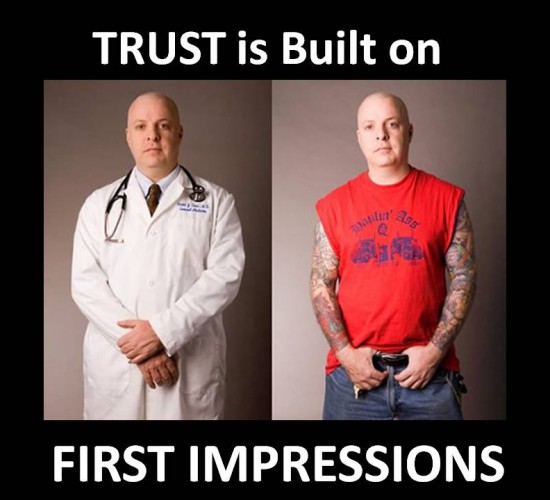
Separating People From Their Behavior: The Power of First Impressions

by Chris Snell, University of Massachusetts Lowell


How can I objectively and effectively work with people diagnosed with developmental disabilities who exhibit challenging behaviors in the community?

I had no idea what to expect as I walked up the driveway for my first 3pm-11pm shift at a group home where individuals diagnosed with developmental disabilities and mental health issues resided. As I introduced myself to staff and the individuals a veteran staff member pulled me aside and gave me some invaluable advice, “Don’t read their confidential files yet. I’ll make sure you’re safe and don’t get caught saying or doing anything problematic.  It’s important that you spend some time with the guys before you read about their issues.”

I didn’t quite understand the rational at that moment but, I figured that he knew what he was doing and I was still feeling real good about the paycheck I would be getting at the end of the week….I was making nine dollars an hour! I’d have Sallie Mae off my back in no time! The next eight hours flew by as five fascinating men introduced themselves to me and provided me with snapshots of who they were. I found myself enjoying the interactions and the people who would become a significant part of my life for the next two years.

That day has become a template I’ve followed through my entire career. It is so important that we connect on a personal and professional level with the people to whom we provide support. I believe this to be even more important when working with people whose behavioral presentation can be hard to address or observe without judgment. After having the opportunity to form a first impression based on face-to-face interactions, I could then process the second impression that resulted from reviewing the confidential case files of each of the men I has spoken with earlier.

Our society ascribes a lot of negative social identities to people living with developmental disabilities and mental health issues. I implore you to give people living with developmental disabilities and mental health issues an opportunity to provide you with the "foreward" first-hand before you delve into the "novel" of their lives.  When training new staff, I have always tried to impress on them the impact of the monumental paper trail that follows people seeking mental health services. Imagine if there was a large book that documented every misstep, mistake, and significant event you have experienced …..EVER! It frightens me to think what the pages of my confidential case file would look like for ages 18-25. Now imagine that this personal history is available to every service provider with whom you interact!

There are occasions when I’m asked how I work with people who are stereotypically assumed to exhibit aggressive, unsafe, or illegal behavior. I make every attempt to reign in the "preachy advocate" in me but, I always mention the fact that there are a growing number of people in our community who are being transitioned into the community as institutional facilities continue closing at a rapid rate (click here to read an article on challenges to providing mental health care in Massachusetts) and these people need empathetic support from nonjudgmental professionals. It has been my experience that many of the people coming out of state facilities struggle with the transition into the community and need strong, passionate professionals to assist in their re-entry into the community.  In the same way that it’s not appropriate, helpful, or ethical to label someone as a “biter” or “spitter,” the labels too often affixed to people diagnosed with developmental disabilities do not have any place in the support we provide them.

#commpsych

Chris Snell is a graduate student in the Autism Studies program at the University of Massachusetts Lowell. He is currently enrolled in Dr. Christopher Allen's Introduction to Community Social Psychology course.

Thursday, October 15, 2015

Diving Into The Unknown: The Story of Community Psychology

by Annisha Susilo, University of Massachusetts Lowell


Image Credit: 

I used to be terrified of change and not knowing what comes next. I like to live by plans and certainty makes me feel safe. I think that’s what psychologist in the 1960’s probably felt like when they first started working in the field of community psychology. That was the image I pictured from reading the first chapter of “Community Psychology: Foundations for Practice” by Scott & Wolfe (2015) and attending my first class on community psychology.

Born to address and alleviate significant social issues (Scott & Wolfe, 2015), the field of community psychology took on huge a responsibility for facilitating social change. Additionally, it championed the importance of conceptualizing social issues from an ecological perspective and using strengths-based prevention strategies to address them. Gaining support for such approaches was not an easy task. Community psychology has had to overcome challenges such as gaining recognition and legitimacy, applying theory to solve problems in the field, and connecting research with field work (Scott & Wolfe, 2015). The discipline's emphasis on looking at problems in context, with all the messiness and multiple factors involved and then apply theory and research findings to solve them, is what most attracted me to this field.

As a recent graduate majoring in psychology, I had a very simple and straightforward vision of what psychologists do. Psychologists have clinical practices where they assess and diagnose patients and then, deliver appropriate treatment. However, the reality is much more complex than that. Through working with children with Autism Spectrum Disorder (ASD) from different socio-economic backgrounds and institutions in Jakarta, I learned that there weren’t standardized methods of assessment and treatment that psychologists in my home country can use for children with ASD. Most of the assessments were translated but not validated for the Indonesian population. In addition, not every therapist working with children with ASD were trained in working with this population. As a result, it very difficult to provide a child with ASD the best assessment, diagnosis and treatment in Indonesia. But the problem does not stop here, since there isn’t any center for ASD and a lot of the clinics have a long waiting list, it is very difficult for parents to get information and resources regarding ASD. There is no government support, no easy access for resources, no funding for research. It’s a nightmare to a lot of parents and extremely difficult situation for those with few economic resources. Ultimately, children bear the brunt of these shortcomings; they can't get properly diagnosed, and as a result, are prevented from accessing appropriate treatment.  This is what drove me to pursue a master’s degree in community psychology.  I know that I’m not going to be able to make a change by working as a psychologist one-on-one with clients; there are too many families that need help and too many issues to take into account. I need to look at the bigger picture and find broader, more, systemic solutions.

The complexities of community psychology are not easy and its bit intimidating to be a part of this field but, I’m glad that the founders of community psychology didn't shy away from the challenges they faced early on. I hope that one day, with enough experience and knowledge, I can go back to my home country of Indonesia and provide much needed help to the ASD community there. This will be the first time I’m diving into the unknown. 

#commpsych


Annisha Susilo is a student in the Navitas program at the University of Massachusetts Lowell. She is currently enrolled in Dr. Christopher Allen's Introduction to Community Social Psychology course.

References

Scott, V. C., & Wolfe, S. M. (2015). Community Psychology Foundations for Practice. California: Sage.

Tuesday, October 13, 2015

Collaboration and Social Change


by Selin Tekin, University of Massachusetts Lowell


Peace is an easy path to tread
Peace is where our fears are mislaid
Peace is a beginning to restore
…
Peace is a friendly open hand
Peace is a place to understand
…
Peace is an end to all hate
Peace is why we negotiate
Peace for all victims of war

excerpt from "Path of Peace" by Paul McCann

The term "fanatic" is often used to describe someone with an extreme point of view. While the shorter and benign form of this word, "fan," is commonly used to refer to sports enthusiasts, the word "fanatic" is often used in a derogatory manner to describe people who hold extreme religious views. However, while a person may appear to be a terrorist in the eyes of his enemy, they may also be heralded as a freedom fighter in the eyes of their supporters (Marimaa, 2011). Social scientists have long struggled with explaining why people stick to one ideology and are unable to tolerate critics of their ideas (Castels, 2010). Though conflicts are commonplace when people hold opposing views, social science research has shown that people with opposing viewpoints can put aside their differences to pursue a shared goal. I witnessed this firsthand only a few years ago.

Gezi Park, is a popular park for socializing that is located in one of the busiest districts of Istanbul, Turkey. In 2013, when municipal authorities attempted to redevelop the space into a shopping mall, citizens protested. The protest began peacefully; people would gather in the park to read or simply sit in silent protest. However, the government responded by sending the police to disperse the posters with force (Celik & Andic, 2013).One of the most interesting things about the Gezi Park protest was seeing that people from cultural groups come together as one to protest against the government action. Whether conservative or liberal, religious or atheist, or nationalist citizens, people from a range of backgrounds unified to protest the government's plan for the park.

The power of superordinate goals to bring people together is reminiscent of the classic Robber's Cave experiment by Sherif. In the first part of the study, Sherif created an intense rivalry between two groups (the "Rattlers" and the "Eagles") of boys at a summer camp by having them compete in a variety of games.  In the second part of the experiment, the researchers created a game which required the cooperative effort of both groups to succeed. Given their history of competing, the Rattlers and Eagles were reluctant to cooperate. However, they eventually learned that being opponents did not lead them to a solution (Sherif, 1958).

Many of the cultural and religious groups involved in the Gezi Park protests, had long histories of hostility toward one another. However, when faced with the prospect of losing Gezi Park, they were able to work together and leverage their "cold anger" (see Langhout, 2015) at municipal authorities for social action. Gezi Park remains a popular respite in downtown Istanbul.
#commpsych    

#occupygezi 

Selin Tekin is a graduate student in the Community Social Psychology program at the University of Massachusetts Lowell. She is currently enrolled in Dr. Christopher Allen's Introduction to Community Social Psychology course.

References

Castells, M. (2010). The Power of Identity (2nd ed.). West Sussex: Wiley-Blackwell Publication.

Celik, M., Andic, S. (2013).Prof. Dr. Ali Donmez ile Sosyal Psikoloji Uzerine… Nesne Dergisi, 1(1): 70-73.

Langhout, R. D. (2015). Consedering Community Social Psychology Competencies: A Love Letter To Budding Scholar-Activists Who Wonder if They Have What It Takes. American Journal of Community Psychology, (55),  269-273.

Marimaa, K. (2011). The Many Faces of Fanaticsm. ENDC Proceeding, (14), 29-32.

McCann, P. (2015). Path of peace. Retrieved from: http://www.poemhunter.com/poem/path-of-peace/

Sherif, M. (1958). Superordinate goals in the reduction of intergroup conflict. The American Journal of Sociology, 63(4), 349-356.

Thursday, October 8, 2015

Is Health Class Important for the Community?

by Mariah Bourne, University of Massachusetts Lowell


Image Credit: 


It has always been a goal of mine to become a high school health teacher. However, once I began working in the school system, I learned that my goal might be harder to attain than I realized. Recently, I was having a conversation with another teacher at a school where I work as a substitute. After answering the obligatory "chit-chat" questions (e.g. "How long have you been substitute teaching?," "Where do you go to college?", etc.) she asked about my professional aspirations. When I told her that I wanted to be a health teacher, I was met with a very quizzical look. I was surprised by her response because, until then, I had never thought of being a health teacher as an uncommon calling. What she said next stuck with me. "Health is a dying field," she said. 

I didn't pay her comment much attention until I started hearing similar statements from other teachers. Then, I really started to wonder: What does this mean for the future of young adults (and my own professional goals)?!? It just made no sense to me that a class that was meant for educating future adults on the importance of making healthy decisions was no longer viewed as being important. 

Restoring the reputation of health class is tricky; many don't see it as having the same relevance of more traditional subjects like English or math. However, I think that health class is one of the most important classes offered in grade schools. As Kelly's principle of succession (as cited in Scott & Wolfe, 2015) reminds us, the students in health classes today will grow up to become the community leaders of tomorrow. It makes good sense to educate and help empower children to make healthy lifestyle choices so they can be positive role models and contribute to building healthy communities.

Community psychologists can help repair the reputation of health classes by sharing the importance of prevention and strengths-based approaches to health and wellness. In addition, community psychologists can assist schools in developing and conducting needs and resource assessments to ensure that students are receiving health education that is tailored to their school and community contexts. Delivering health content that has clear connections to the lived experience of students will help generate excitement for new health classes curriculum that being taught the most recent and effective information. The potential benefits from a socio-culturally relevant health class could be life changing for students and have a lasting community impact. Let's reboot health class!


#commpsych
#healthrocks

Mariah Bourne is a graduate student in the Community Social Psychology program at the University of Massachusetts Lowell. She is currently enrolled in Dr. Christopher Allen's Introduction to Community Social Psychology course.

References

Scott, V.C. & Wolfe, S.M. (2015). Community Psychology: Foundations for Practice. Thousand Oaks, CA: Sage.

Tuesday, October 6, 2015

Living On Hope, Hoping For a Bright Future: Syria’s Children

by Tuğba Metinyurt, University of Massachusetts Lowell


Image Credit:
https://res.cloudinary.com/tremr/image/upload/dugn5ijc64amyiem3egp.jpg

“My adolescence, it was taken from me. I feel that I am in a different world, as if I am not living. Sometimes I wish we died before seeing what we saw. I wish we never came to this world and saw this.” 

These words belong to a 16-year-old refugee girl, who fled violence in her home country (Kashi, 2014). 

According to annual situation report by UNICEF, in November 2014, 10.9 million Syrians were displaced outside of Syria, including over 3.3 million refugees across Lebanon, Jordan, Iraq, Turkey and Egypt. More than half of the refugee population are children. (UNICEF, 2014a, p.1)  Syria’s children have witnessed too many violent and traumatic acts. Consequently, they are growing up with feelings of mistrust, betrayal, anger, displacement and uncertainty about their future. Children under the age of 18 are growing up in unsanitary conditions, in need of education, and in need of healthcare and psychological support. These children are at risk of becoming a “lost generation” and they need a sense of belonging in their new environment as well as basic humanitarian needs.

The recently published Bahcesehir Study of Syrian Refugee Children in Turkey (Ozer, Sirin, Oppedal, 2015) interviewed refugee children from Syria. According to this study, three in every four Syrian children had lost a loved one due to the bloody conflict; one in every three children had been hit, tortured or shot at in the course of the conflict. In addition, many people lost access to healthcare and are living in unsanitary conditions where the risk of disease is high. 2,000 schools have either been damaged by the fighting or become temporary shelters for displaced people, greatly disrupting Syrian education. (p. 20-25)

Community psychologists provide services for refugees and seek solutions to provide mental health and health care services, to enhance protective factors such as social support, to engage children and adolescents in preventing discrimination, violence, abuse, exclusion, prejudice and separation of children through educational programs. They also attempt to address the social and physical causes of psychological distress in refugees. 

Providing healthcare and education services is vital for protecting the host communities and the refugees. In doing this, they can prevent the built up anger that may threaten host communities in the near future. As Ozer and Sirin stated (2013), “…places like Afghanistan or Rwanda should remind us what happens when refugees are left to their own devices: camps, full of people who feel forgotten and, therefore, hopeless and angry, becomes recruitment grounds for child soldiers. This cycle carries the civil unrest across generations.” To avert this cycle, community psychologists can take an active role in creating a sense of belonging and helping refugees connect to their community. To achieve this goal, time banking can be used as a tool to develop links between refugees and host communities. Time banking is a reciprocity-based economic system where time, instead of money, serves as currency. Time banks allow communities to come together and trade services, connecting people, filling needs, and creating growth. “This program gives refugees and host communities the opportunity to earn time credits for voluntary work and to exchange these credits for the equivalent amount of time of someone else’s skills, serving to develop links between refugees and host communities.” (Webster & Robertson, 2007, p. 156). 

It is also promising that many non-profit organizations from around the world, such as UNICEF, USAID, and Save The Children are working together to save Syria’s children. UNICEF is lending a helping hand to these children and their families, providing psycho-social support as well as shelters, warm clothes and accessible education for children (UNICEF, 2014b). In addition to UNICEF, the USAID- No Lost Generation project helps provide psycho-social services through women's health centers, mobile clinics, and outreach workers to help Syrians deal with the stresses of conflict and displacement. It also leads parent support programs which focuses on helping mothers, fathers, and caretakers develop the skills to cope with stress and to provide protective care for their children (USAID, 2014). The Save The Children team is another organization that runs alternative learning programs and informal education in refugee camps and host communities, providing safe play areas and access to counseling for thousands of children across the region. They also launch back-to-school campaigns to encourage parents to enroll their children (Save The Children, 2014).

If you would like to learn more about the lives of Syrian refugees, I would recommend a short documentary called Syria’s Lost Generation, (Syria's Lost Generation).

#commpsych

Tuğba Metinyurt is a graduate student in the Community Social Psychology program at the University of Massachusetts Lowell. She is currently enrolled in Dr. Christopher Allen's Introduction to Community Social Psychology course.

References

Kashi, E. (Director). 2014 Syria’s Lost Generation: Directors Give Voice to War’s Young Refugees. Podcast retrieved from: http://talkingeyesmedia.org/syrias-lost-generation

Ozer, S., &, Sirin, S., (2013, April 30). Provide Education and Health Care for the Refugee Children in Syria, The New York Times. Retrieved from: http://www.nytimes.com/roomfordebate/2013/04/29/finding-solutions-for-syrias-growing-refugee-crisis/provide-education-and-health-care-for-the-refugee-children-in-syria 

Ozer, S.,  Sirin, S. & Oppedal, B. (2015). Bahcesehir Study of Syrian Refugee in Turkey. Retrieved from: http://www.fhi.no/dokumenter/4a7c5c4de3.pdf


UNICEF. (2014a).  Syria Crisis- 2014 Annual situation report, 1-5. Retrieved from: http://www.unicef.org/appeals/files/UNICEF_Syria__Annual_Regional_Crisis_Situation_Report_2014_.pdf

UNICEF. (2014b). Retrieved from: http://www.unicef.org/appeals/syrianrefugees.html


Webster, A., Robertson, M., (2007).  Can Community Psychology Meet the Needs of Refugees? The Psychologist, 20(3), 156-158. Retrieved from: http://thepsychologist.bps.org.uk/

Thursday, October 1, 2015

Theater: Entertainment and Then Some

On Tuesdays and Thursdays during the month of October, community psychology students will be contributing entries connecting their life experiences to the field of community psychology. 


by Jackie Marcoux, University of Massachusetts Lowell


The world has been viewing theater for hundreds of years.  It started with the Greeks and the goal of teaching their communities life lessons.  As the art form grew, goals shifted.  Theater became a mode of entertainment; a place to go for a few hours to forget about the poverty that awaited you back home in 1500’s England.  The goal of entertaining a crowd of people has continued into the present. 
Today, we still wish to be entertained when we sit down in the theater but we are also prepared for more.  We want to feel emotions and connect with characters who are different from ourselves.  This idea has been utilized by some artists as a mode of change within the world outside of theater.  I’m not exactly sure when the shift began but we are just starting to see its ripples.

For me, it began with the musical RENT.  RENT put a spotlight on the issue of HIV and AIDS in a way that had never before been done.  People were able to sing along with the songs and connect with these characters.  We may not be diagnosed and dying of AIDS in the early 1990’s but we can certainly imagine we are and realize how important the issue is.  A dialogue was started.

Then came Next to Normal, a musical about a family coping with a matriarch who has delusions of her dead son and is bipolar.  This show paved the way for a discussion about mental health issues and the toll they can take on a family.  There were conversations about whether or not people should be medicated in order to deal with the issue.  The children of these parents were also focused on and questions about whether or not it is healthy for them to live with a parent that has a diagnosed mental illness.  These questions and concerns didn’t just disappear when the show left Broadway.  Every time the show is performed around the country these questions get thought about by the communities that see the show. 


Deaf West's production of Spring Awakening


Currently on Broadway there are multiple shows continuing the idea of theater starting conversations and making impacts.  The play The Curious Incident of the Dog in the Nighttime speaks to autism.  The musical Fun Home deals with LGBT issues and suicide.  Matilda is a musical dealing with abusive adults.  Spring Awakening is a story of teens learning about sexuality in 1600’s Germany. 

On a recent trip to New York City I was able to see Spring Awakening.  In the current production of the show, originally staged by Deaf West based in California, the Deaf culture has been incorporated into the show’s storyline.  The entire production is done in American Sign Language and has selected certain characters as deaf.  This adds a new dimension to the show because not only is it discussing young people discovering their sexuality in a world that tried to hide them from it but it also deals with being a deaf person, particularly at that time in history.  It allows for conversations about sexuality, Deaf culture, and the ability to be inclusive of all people who want to go to the theater.

Community Psychology is all about working towards addressing issues of social justice but that can only happen if conversations about those issues are started.  Theater is no longer a vacuum where the viewer simply goes to be entertained.  Viewers are being forced to look at themselves and the world to find meaning in what they just watched.  In order to find meaning, those dialogues occur and people can begin to work toward fixing the issue.  Sure, some people will continue to go to the theater just to be entertained and to forget about the world for a little while.  It is my hope that more theater will be created that forces the viewer to think critically about an issue, promote action and activism, and create social change.


#commpsych
#theater

Jackie Marcoux is a graduate student in the Community Social Psychology program at the University of Massachusetts Lowell. She is currently enrolled in Dr. Christopher Allen's Introduction to Community Social Psychology course.